

Test Papers – ICSE – Class – X
Prepare JEE Main Exam 2020 & Board Exam Simultaneously
JEE Main Exam and Class XII Exam is one of the main phases of students’ life. The stage calls for the end of school life and also about your future profession. Students tend to ignore board exams and concentrate on the competitive exams to seek admission into the engineering branch of their choice in a reputed organization. JEE Main Exam scores are important for the students to get admission into a reputed institute. Students should answer only those questions about which they are confident and avoid any negative marking which in turn can give a bad score. The Joint Entrance Examination – JEE Main Exam and Class 12th Board Examination is held by The Central Board of Secondary Education (CBSE). Both the examinations are conducted with a gap of approx. 30 days making it difficult to prepare. Overall 50% weightage is given to class XI and XII board syllabus in JEE Main Exam. Here are the tips for preparing for board and JEE Main Exam simultaneously
Timetable:
The students should make a defined timetable for preparing board exams and JEE MainExam. The plan should be such that it covers all the topics related to board exams and JEE Main Exam 2020. Highlight each chapter for the sections to be studied. Preparation of timetable is the easiest task adhering to the time table and utilizing time properly is quite important. Monitor your progress as per timetable on a weekly and monthly basis and make sure that you achieve your study targets.
Not only studies but also frequent revisions are important to be in constant touch with the topic. The exam pattern of board exams and JEE Main Exam is different so long and short questions have to be equally concentrated. The JEE Main syllabus includes Class 11 and 12 syllabus, but the exam pattern is different so you will have to practice for both exams.
Make deadlines for each chapter and set dates. Achieving your targets will help you in boosting your confidence level. Be practical and realistic while designing your study plan. If you do not achieve your targets it will be demotivating and depressive and students will lose interest in studying further.
Read: How to Get 200 In IIT JEE Main Result
Shortlist Books:
Referring to too many books for one single chapter makes the revision very difficult, you have to sit with too many books which creates confusion for which book to refer. Try to concentrate on one reference book for all the chapters. Try to be strong on your basics which help in understanding the concept to write essay answers for the board as well as multiple choice questions for JEE Main Exam.
Students should be thorough with the NCERT textbooks which will help you score well in boards and JEE Main Exam. Try to minimize reference books to a maximum of 2-3 books.
Previous Question Papers:
Try to solve as many question papers as possible to understand the exam pattern. Solve the question paper in the defined time-frame. Working on JEE Main Exam previous years questions papers makes you perfect. Learn shortcuts to solve questions, this will save time in answering questions in JEE Main Exam.
There are many sample and mock test papers available in the market, try to solve as many as possible. It will help you to assess your performance in both board and JEE Main Exam. Be clear with the concepts of theory which will enable you to apply the same in solving numerical problems. JEE Main Exam problems are usually about in depth understanding of the concepts.
Practice with JEE Main Exam Sample Papers.
Health and Nutrition:
This is the most important factor which is ignored by many students. Preparation of board exams and JEE Main Exam puts a lot of stress the students not only to get a good score but also because of social stigma.
Preparing for board exams and JEE Main Exam can be stressful for students. But they must ensure that their health doesn’t get affected because of it. They should avoid studying continuously for long hours. They should take breaks, eat healthy, relax, and get sufficient sleep too.
Students should eat lots of fresh fruits and vegetables. Include health drinks to meet your daily energy requirements.
Board Exams are Equally Important:
If you are thorough with the syllabus of board exams it will help you in getting a good score on boards as well as JEE Main. Many institutes do give weight to board exam results along with the JEE Main Scores.
Analysis of JEE Main Exam Pattern:
Understand the type of questions, length of answers, marking scheme, etc., this will help you to analyze the time required to be spent on each question. Do not spend long time in trying to solve one question which will decrease your chances of scoring due to lack of time to solve known questions.
JEE Main Exam Vs 12th Board Examination
- JEE Main Exam is an objective type question paper having MCQs whereas board exam is a descriptive exam.
- JEE Main syllabus includes class XI and class XII syllabus whereas Class XII board exam has only class XII syllabus.
- JEE Main Exam is a difficult exam which requires lots of skills and knowledge to clear the exam. Average and below average students won’t be able to clear JEE Main. Board exams are comparatively easier and an average student can also pass the exam.
- JEE Main Exam Questions do carry negative marking which makes getting a good score a difficult task whereas there is no negative marking for board exam.
Some Quick Tips To Get Through JEE Main Exam
- Hard work and dedication will always be by your side and pays you with success.
- ‘Practice makes the man perfect’- Practice as many Previous Years’ Question Papers and Sample Papers as possible, this will help in solving exam paper in time and you will improve your problem-solving ability.
- Make sure you study for 2-3 hours at a stretch with concentration.
- Make sure you take small breaks to refresh the mind and take a fresh start again.
- Have a positive attitude to achieve a good score.
- Spend quality time in studying rather than quantity. It does not matter how many hours you spend studying, the number of chapters revised or studied is important.
- Highlight important points and make personal notes. Mark the questions which you find it difficult to answer, this will help in revising. Be sure to understand and tackle the difficult questions with an expert.
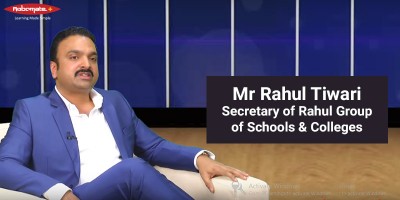
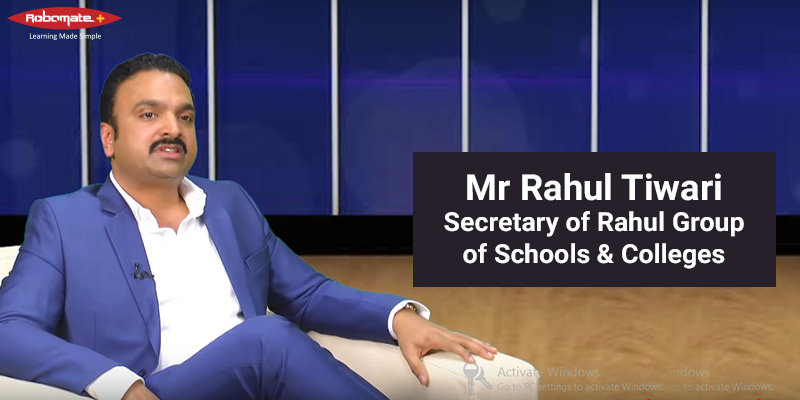
Mr Rahul Tiwari of Rahul Group of Schools & Colleges talks about Guiding Students to Right Careers
From chalk and board to smart classrooms, education has come a long way! Mr. Rahul Tiwari, Secretary of Rahul Group of Schools & Colleges, brings to light the role of teachers and digital learning to help students learn easily and make the right choice of careers.
Watch Full Video
Rahul International School is ranked no. 2 in the international curriculum zone G by Times School Survey, 2018.

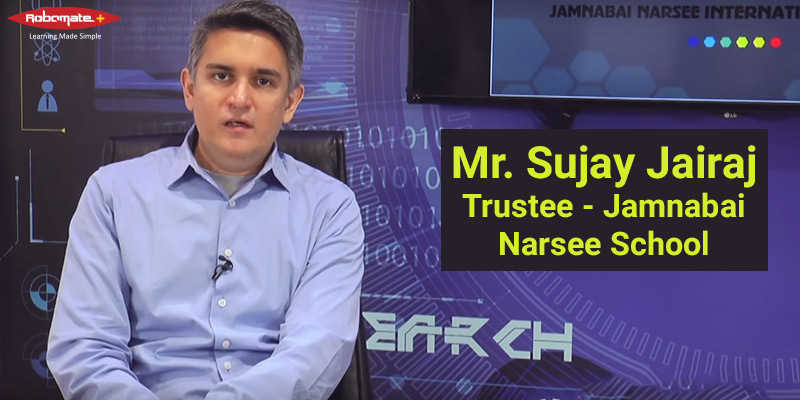
Mr Sujay Jairaj, Trustee, Narsee Monjee School talks about empowering teachers through Technology
Mr Sujay Jairaj, Trustee, Narsee Monjee Educational Trust, talks about how Teachers are the key, empowering students and they themselves to be updated along with the students and need personal, professional and intellectual growth.
According to Mr Jairaj, technology has become a very important aspect for educational institutes because it helps teachers in transferring information and getting more questions answered for the student. It also helps make the classroom more interesting and students more involved.
HBBVS – Important Dates, Syllabus, Exam Pattern, Cut-Off
About HBBVS
With an aim of luring the students to the field of science, Dr. Homi Bhabha Balvidnyanik Spardha( HBBVS)is held every year for the students of 6th and 9th standard. The exam is conducted by the Mumbai Science Teachers Association and encourages the students towards the field of science.
In this world of science and technology no one is unaware of the fact that science is changing our lives, and due to this change, various career options are also emerging in this field. Science has changed the world altogether in a different way, and the world of science needs the people with talent to take this field to new heights, and the students also should be made aware about this fascinating world of science and technology. HBBVS is also a way to get the students aware of this field, this talent based examination selects the talented students and provide them with a number of opportunities and grant them a better future ahead.
Syllabus for HBBVS
The syllabus is mainly the science subject and some general knowledge about science, the syllabus mainly depends on the class in which the aspirant is studying. The student preparing for this examination has to prepare all the topics included in their CBSE or ICSE textbooks. SSC curricula are followed for the classes 5th and 6th. The topics for each class are mentioned below;
Class 5:-
Living Things, Plant Life, Animal Life, Interdependence in Nature, Bones and Muscles, The Nervous System, Food and Health, Safety and First Aid, Rocks and Minerals, Soil Erosion and Conservation, Air, Water and Weather, The Moon, Simple Machines, The Environment, and Natural Calamities.
Class 6:-
Our Food, Playing With Magnets, Rain: Where does it come from, What Do Animals Eat, Materials and Things, Habitat, Separation of Substances, Fibre to Fabric, Plants: Parts and Functions, Changes around us, Water in Our Life, Simple Electric Circuits, Learning How to Measure, Movements in Animals, Lights, Shadow and Images, and Living and Non-living
Class 7:-
Food Components, Acids and Bases, Animal Fibre, Motion and Time, Temperature and its Measurement, Weather, Climate and Adaptation of Animals to Climate, Electricity, Air, Wind and Cyclones, Reflection of Light, Nutrition in Plants, Respiration in Organisms, Reproduction in Plants, Seed Dispersal, Water, Soil: Our Life, Forest: Our Life, and Changes around Us
Class 8:-
Force, Friction, Some Natural Phenomena, Stars and the Solar System, Synthetics Fibres and Plastics, Metals and Non-Metals, Coal and Petroleum, Combustion, Fuels and Flames, Electrical Conductivity of Liquids, What is Science, Cell – The Basic Unit of Life, Story of Micro-Organisms (part 1 and 2), Reproduction in Animals, Reaching the Age of Adolescence, Biodiversity and its Conservation, Different Ecosystems, Food Production from Plants Methods of Management, Production and Management of Food from Animals, Not For Drink, Not For Health, and Why do we fall ill?
Class 9:-
Motion, Laws of Motion, Gravitation, Work and Energy, Sound, Matter around us, Is Matter Pure?, Atoms and Molecules, What is inside the Atom?, Floating Bodies, Plant Tissues, Animal Tissues, Movement of Materials across a Cell Membrane, Diversity in Living Organisms, Sense Organs, Animal Behaviour, Challenges in Improving Agriculture Products, Adaptations, Soil Protection and Bio Geo Chemicals
Exam Pattern for HBBVS
The exam will be conducted in 3 phases
Phase 1- written test: The students of the 6th standard have to prepare the syllabus of class 5 and 6 for the exam and the students of the 9th standard have to prepare the syllabus of class 7, 8 and 9. The questions are objective type (MCQs). The examination is based on written mode and the duration of the examination is 90 minutes (1.5 hours). The number of questions is 100 and 1 mark is awarded for every correct answer and there is no negative marking.
Phase II-Practical competition: It include 5 experiments and 6 marks are awarded for each correct experiment, it also does not have a negative marking system.
Phase III: The last phase is the interview phase along with the Evaluation of action research project and the students that pass this phase are selected.
How to Apply For HBBVS
The students of 6th standard or 9th standard can apply for the examination.
The registration is done in two steps; school registration and student registration. Registration can be done by visiting www.msta.in and complete the registration for the school and after obtaining the id and password one can visit his profile and complete all the formalities like ‘Adding Fees’. The registrations can be an individual student or bulk student registrations and accordingly click on ‘Add student’ or ‘Upload Student’. After completing all the steps one can take a printout and keep for reference. The fees include rupees 210 per student, depending on the group. The money can be deposited from any SBI branch.
Important Dates:
Practical Competition Result: II week of January 2019
Interview and evaluation of research report: 17th Feb. 2019 Social Service League high School, Parel
Prize Distribution: 3rd March 2019 Yashwant Natyamandir, Matunga
Online Entry forms for 2019-2020: expected to be released in July 2019
Results and Cut-Off
7.5% of the students are selected based on performance in Phase I and are promoted to appear for the practical test. The meritorious 10% of the candidates from Phase II are selected for the last phase.
Among the selected candidates, the prizes are categorized into three
- top 10% candidates: gold medal, certificate and a scholarship of Rs. 1000/-,
- 40% students: Silver Medal, certificate and scholarship of 500/- and
- the last 40% candidates: Bronze Medal, certificate and scholarship of 300/-
How to Prepare For HBBVS
To crack the examination of HBBVS the students should keep in mind that the questions will be asked from the SSC syllabus and the general knowledge questions will be from the latest news and latest trends in the scientific world. Practical questions are given more importance over the other questions.
COMEDK UGET – Important Dates, Eligibility, Application Form, Syllabus, Cut Off
The consortium of Medical, Engineering and Dental Colleges of Karnataka (COMEDK) is a state level entrance exam for students seeking admission into undergraduate programs in the State of Karnataka. This year COMEDK and Karnataka Unaided Private Engineering College Association (KUPECA) have joined hands to conduct COMEDK. The candidates can seek admission into 190 engineering colleges, 20,000 seats as per the score in the COMEDK UGET 2019. The test will be conducted once in a year. The application has to be submitted by online mode. The students can appear for a mock test for self-assessment. After the entrance test, the key will be released for students to estimate their marks.
Important Dates for COMEDK UGET 2019:
Start of registration: Jan 2019- Second week
Mock test: February 2019- First Week
Last date for submission of application and payment of fees: April 2019- Second week
The issue of hall ticket: May 2019- First week
Date of examination: May 12, 2019
Availability of answer key: May 2019-third week
The announcement of results: May 2019, last week
Counseling for admission: July 2019- second week
Eligibility Criteria for COMEDK UGET 2019
The eligibility criterion for COMEDK UGET 2019 for applying B.Tech and B. Arch degree programmes is different. Here are the eligibility criteria for the individual courses
Engineering courses:
- The candidates must have passed or appearing for class XII or equivalent examination which is recognized by the State or Central Government.
- The candidates must have Physics, Chemistry, and Mathematics as the main subjects. The candidate should also have the English language as the compulsory subject.
- The candidates should score a minimum of 45% marks in subjects of Physics, Chemistry, and Mathematics. The SC/ST/OBC candidates have marks relaxation from 45% to 40 %.
Note: The candidates holding diploma will not be eligible to appear for COMEDK UGET as there is a provision of lateral entry in the degree programme.
Architecture Courses:
- The candidate should have passed or appeared of class XII, second PUC or equivalent degree as recognized by the board. Diploma candidates (Class X + 3 years diploma) are also eligible to appear for the COMEDK UGET. The diploma should be recognized by the State or Central Government.
- Maths is a mandatory subject for the students to appear for the COMEDK UGET
- The candidates should score a minimum of 50% marks in class XII, second PUC or diploma. SC/ST/OBC candidates of Karnataka has marks relaxation of 45% from 50%.
- The candidates should have qualified architecture aptitude test (NATA or JEE Main 2019 Paper-II or equivalent) in 2019
There will not be an entrance test for candidates seeking admission in B. Arch. The candidates have to apply separately as per notification from COMEDK.
Registration and Application for COMEDK UGET 2019:
The candidates need to first register on the COMEDK UGET website. The candidates have to keep a valid email ID and mobile number handy for registration.
Registration step would require entering the name and date of birth as per class X certificate, email ID and mobile number. After successful registration, a valid username and password will be generated. These login details are emailed on the registered email address and mobile number.
Log in using the above credentials, the application form will require filling personal details, academic details, and contact details. Keeps all the academic documents, aadhar card and address proof in hand for easy and correct filling of detail.
The application form will also require uploading a recent photograph (less than 80kb in JPEG or JPG format), the signature of students and parents separately and valid ID proof (35 x 80 mm dimension and of size less than 80kb in JPEG or JPG format).
The candidates have the option of selecting test centers as per convenience. After submission of application, the payment can be made by online mode through net banking, debit card or credit card.
The cost of the application fee for COMEDK UGET application is Rs. 1300 + 18% GST + the convenience charges. The cost of the application fee for Uni-GAUGE application is Rs. 1600 + 18% GST + the convenience charges. In case the candidates are applying for both COMEDK UGET and Uni-GAUGE, the cost of application is Rs. 2100 + 18% GST + the convenience charges.
After successful submission of application, the acknowledgment will be sent on the registered email address. Keep this acknowledgment for ready reference until the exam.
Syllabus COMEDK UGET 2019:
The candidates have to be thorough in subjects of Physics, Chemistry, and Mathematics. The main topics to be covered are
Mathematics: Differential Calculus, Matrices and Determinants, Probability, Integral Calculus, Vector Algebra, Three Dimensional Geometry, Differential Equations and Circles
Physics: Thermal and Chemical Effects of Currents, Oscillations, Electrostatics, Motion in One Dimension, Motion in Two and Three Dimension and Heat and Thermodynamics
Chemistry: Nuclear Chemistry, Biomolecules, Polymers, Environmental Chemistry, Chemistry in Action, Coordination Chemistry, and Chemical Reactions and Chemical Kinetics
Result:
COMEDK is responsible for releasing the results and also key to the question paper. Students can estimate their rank and plan for the admission in the prospective colleges.
Cut Off:
The cut-off marks for the exam will be released by the concerned authority. The candidates who have secured marks more than the cut-off marks will be on the safer side to secure an admission. The cut-off marks for seeking admission into each of the affiliated institutes will be different. The cutoff marks will depend upon the difficulty level of the test number of candidates appearing and qualified for the test, number of seats available in each stream. COMEDK will release opening and closing ranks or admission into the affiliated colleges. The candidate who was ranked 1st last year had scored 168 marks.
| COMEDK UGET Marks | Expected Rank |
| 1-10 | 160 – 180 |
| 10-150 | 140 – 160 |
| 150-3400 | 130 – 100 |
| 3400-9500 | 100-80 |