

Test Papers – ICSE – Class – X
Makar Sankranthi – The festival of Harvest and Kites
Makar Sankranthi is celebrated across the globe by Hindus. The word Sankranti refers to transmigration of the sun from one constellation (Rashi) to another. Sankranthi is celebrated on the transition of the sun into the zodiac sign of Maka (Capricorn). There are 12 Rashis across the year. Sankranthi falls mostly on the same day of the calendar year on 14th or 15 January. In the southern part of India Makar Sankranti is celebrated whereas, in the northern part of India, Lohri is celebrated. It is a festival of harvest and farmers celebrate it with great zeal. They offer sweets to the fire God.
The festival is celebrated to honor The Sun God, which is a symbol of knowledge, light, and wisdom. The festival is celebrated to remove darkness and enlighten the life with purity and wisdom.
For children, the festival is known for sesame sweets and kite flying. The day is considered as the onset of the spring season. The farmers harvest their crops. This will be the end of winter season and the day starts to get bigger and nights shorter.
The significance of flying kite: India is a host of colorful events introducing the traditional heritage to youngsters and keeping the traditions alive. Flying kites boosts the people to aim high and fly higher to achieve dreams. Flying kite is considered as auspicious on this occasion. Families organize kite flying in grounds or rooftops. The weather is good with bright sun where the sun is transmigrating to a new Rashi. There will be special markets for kites and its accessories. Kites of all color, sizes, and shapes will be available in the market. Kite flying competition is organized by many communities, the winner will be awarded. The bright high flying kites in the clear blue sky make it an exciting experience. The warmth of the sun after the winter season is pleasant and appealing. People get up early in the morning to fly kites and the celebration continues until dusk. The early sunrays provide Vitamin D and are good for immunity and in the maintenance of healthy skin and bones. The sunrays are believed to have beneficial effects on diseases and it also helps in curing dry skin.
It is believed that Gods will awaken after winter season has come to an end and they will send their blessings. People fly the kites higher thinking it will reach to Gods in heaven and they send blessings. The kites are flown as a sign of joy and happiness.
The significance of Sesame Seeds: Traditionally people make sweets of sesame seeds and jaggery. It is assumed that the tradition of making sesame seeds have been adopted from the Maharashtrian culture which goes by the saying “eat sweet sesame and jaggery sweets and speak sweet words”. People share these sweets with relatives, friends, and neighbors which helps in removing hatred and increases love and affection towards each other.
The day is considered as auspicious for making donations, charity and to perform puja. People wear yellow colored clothes and make Urad Dal khichdi as bhog. Yellow color represents the color of the Sun, who is prayed during this festival. The houses are decorated with flowers and rangoli.
Enjoy the festival of kites and assure your safety as well!
Happy Makar Sankranti!
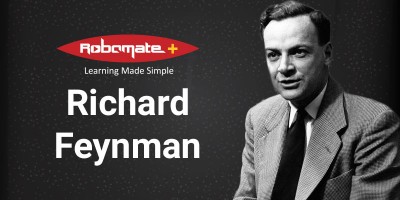
Richard Feynman and How to Remember What You Study
“Richard Phillips Feynman” was a theoretical physicist from America who was and is known for his important and everlasting work in quantum mechanics, quantum electrodynamics and the super-fluidity of super-cooled liquid helium. His model of proton is also a contribution to particle physics. He is also known for the famous Feynman Technique that helps in remembering what you study.
About the life of Richard Phillips Feynman:
Early Life of Richard Feynman
Richard Feynman was born on 11 May 1918 in Queens New York, to Melville Feynman and Lucille Phillips. His father was a Jew and he had moved to Unites States before the birth of Richard Feynman. On the other hand Richard’s mother was a polish emigrant and married to Melville in 1917, and after a year they both were gifted by God with a baby namely Richard Phillips Feynman. After a few years his parents were again gifted with another boy but soon the happiness turned into grief as the infant died at the age of five weeks only. Thankfully the family soon overcame the turmoil and Richard started his school where he enjoyed the subject of Math and it was foreseen that he would do good in this subject.
Schooling and Professional Life in Brief
After finishing his school he applied for many universities, but got rejected due to his being a Jew. But after a struggle he got admitted in MIT in 1935 and completed his B.Sc. in 1939. During the years of MIT, Richard had developed interest in physics, although there was no option for quantum mechanics which the Richard was very keen to explore. Richard studied Dirac and he became the first scientist whom the Richard admired the most. With the help of John Slater, Richard was accepted by Princeton for his Ph.D. and Richard completed his Ph.D. before the Second World War. And soon after this he started his work on the Atom Bomb in Princeton. But while Richard was enjoying his professional life and studies, his personal life was a bit hectic for him as his girlfriend Arlene Greenbaum, was suffering from tuberculosis. Despite the opposing of his family Richard married Arlene and shortly after their marriage Richard was appointed as head of theoretical division of Los Alamos site. In 1945 he was also appointed as theoretical professor at Cornell University. After the death of his first wife he remarried two times in his lifetime. He himself died on 15 February 1998 in Los Angeles, California at the age of 69. His resting place is at Mountain View Cemetery and Mausoleum, Altadena, California.
Qualification and works of Richard Phillips Feynman:
Richard Feynman completed his B.Sc. from MIT in 1939 and soon felt that he must go for Ph.D. He completed his Ph.D. from Princeton before America entered the Second World War and after the completion of his Ph.D. he started working on the Atom Bomb. Although physics was not primary for Richard in MIT but his keen interest and enthusiasm for physics and math mainly quantum mechanics led him to devote his life to it. His main field is ‘Theoretical Physics’ and he did excellently well in it. His thesis are “The Principle of Least Action in Quantum Mechanics”.
Richard Feynman is known for his work in:
Manhattan Project, Acoustic Wave Equation, Bethe-Feynman Formula, Feynman Checkerboard, Feynman Diagrams, Feynman Gauge, Feynman-Kac Formula, Feynman Point, Feynman Slash Notation, V-A Theory, Vortex Ring Model, The Feynman Lectures on Physics, and much more.
Feynman Technique:
Feynman Technique also known as Feynman’s Notebook Technique is a mental model that was introduced by the great physicist Richard Phillips Feynman. He is also termed as the “Great Explainer” because of his ability to make anyone understand any complex topic virtually and in simple terms, that is what made him different from others. He once opened a new notebook and wrote on it The Notebook of Things I Don’t Know About’, and started disassembling all the branches of his knowledge and assembled them back in simple terms to make it easy to understand.
All the four steps of Feynman Technique are mentioned below:
1:- Note down all the information that you have about a topic on a notebook, and add something to it every time you come to know about it.
2:- Make sure that what you have written is easy and simple enough for you to explain it in simple terms.
3:- Perfect the topic that means you should have complete knowledge about your topic and make sure that you don’t have any gaps in your knowledge.
4:- Last but not the least, repeat the topic and its content so that you are able to simplify it and connect its facts to one another, this will also help you to understand it well and strengthen your knowledge.
Richard Phillips Feynman’s Awards and Achievements:
No one is unaware of the contribution of Richard Phillips Feynman to the world of physics and especially to the field of Theoretical Physics and he was greatly admired for it and also led him to winning many prestigious awards that include:
Albert Einstein Award in 1954.
- O. Lawrence Award in 1962.
Foreign Member of the Royal Society in 1965.
Oersted Medal in 1972.
National Medal of Science in 1979.
He was also awarded “Nobel Prize in Physics” in the year 1965.
Besides all his awards he also earned a name for himself “The Great Explainer”.
Books by Richard Phillips Feynman:
Surely You Are Joking Mr Feynman: Adventures of a Curious Character.
What Do You Care, what Other People Think?
The Feynman Lectures on Computation.
The Character of Physical Law.
The Pleasure of Finding Things Out.
Feynman’s Lost Lectures.
His famous quotes include:
What I cannot create, I do not understand.
In any decision for action, when you have to make up your mind what to do, there is always a ‘should’ involved, and this cannot be worked out from, ‘if I do this, what will happen?’ alone.
Physics is like sex: sure, it may give some practical results, but that’s not why we do it.
CBSE 2019 Class X Exam Time Table Released
Central Board of Secondary Education has released the timetable for the schedule of board exams for class X and XII 2019. As already informed by the board, the examinations have been preponed owing to the Lok Sabha elections. The examinations are expected to start 15 days before the previous years. The circulars have been sent to all the affiliated schools and the students can download the date sheet from the official website of the board cbse.nic.in.
The exams are scheduled to commence from 21st February 2019 and the exams will end on 29th March 2019. The exam will be for 34 days having the different combination of subjects. The main subject exams will be held in the month of March 2019. The duration of exams is 3 hours and the exam will be conducted from 10:30 am to 1:30 pm. The candidates will be given 15 mins to read the question paper. The first exam will be of ‘Publishing and Office’ and the last exam is of ‘Social Science’.
The students are advised to read the instructions as set by the board carefully to avoid any last minute rush. The students should make their timetable as per the board exam schedule.
BITS 2019 Sample Test Paper
For Solutions Please Click here
BITS 2019 Sample Test Paper
For Solutions Please Click here
JEE Main 2019 – Eligibility, Exam Date, Exam Pattern, Syllabus, Correction Process
Joint Entrance Examination (JEE) is an engineering entrance examination which is being conducted in place of AIEEE. The candidates who have cleared JEE are eligible for admission into National Institutes of Technology (NITs), Indian Institutes of Information Technology (IIITs), and “centrally funded technical institutes” (CFTIs).
Application Form
Good news for the aspirants of JEE Main, the exam will be conducted twice in a year in the month of January and April. Candidates can visit the official website and fill in the application. Keep all the documents handy such as educational certificates, adhar card, and contact details. The application will be in two steps, registration and filling of application form.
Application Fee:
The candidates for appearing for JEE main 2019 have to pay the application fee. The payment can be done online through debit or credit card; the candidates can also make payment through e-challan of Syndicate bank, Canara bank or ICICI Bank. Make a note that once the application fee has been paid it will not be refunded or used for the future purpose.
Fees for local candidates:
The application fee for JEE main paper 1 or paper 2 for boys under general category is 540 rupees and for girls under general category is 250 rupees and for reservation category, the students have to pay 250 rupees for paper 1 or paper 2.
The application fee for both JEE main paper 1 and JEE main paper 2 for students under general category boys 1300 rupees and for girls 650 rupees, for reservation category fees, is rupees 650 for both boys and girls.
Fees for foreign candidates:
In case the candidates are appearing for the exam from a foreign country, under general category the fees for IIT JEE main paper 1 or JEE main paper 2 for boys is 2500 and for girls, it’s 1250 and for reservation category, it’s 1250 for both boys and girls. The candidates appearing for JEE main paper 1 and paper 2 from foreign countries have to pay an amount of 3800 and girls have to pay an amount of 1900 rupees, for the reservation category the fees is 1900 for both boys and girls
Exam Pattern
JEE main 2019 examination will be conducted in online mode i.e. computer-based test. The duration of the exam is 3 hours. The question paper will have all the objective type questions in the form of MCQs. JEE Main Paper II drawing section will be will be pen and paper-based.
The candidates can attempt examination in Hindi or English language, giving the option of attempting in the Hindi language gives an opportunity for the people of a Hindi medium to write the exam with confidence. In addition to Hindi, students can also attempt exam in the Gujarati language. This option is available for students appearing for the exam from Gujarat Daman and Diu Dadra and Nagar Haveli.
JEE main examination will have paper 1 and paper 2. Paper 1 is for the bachelor of engineering or bachelor of technology, the questions will be from maths, physics, and chemistry. Each subject will have 30 questions carrying 120 marks, so paper 1 will be of 90 questions with the maximum marks of 360.
Paper 2 is for the bachelor of architecture or B. Planning. The paper will be in mathematics, aptitude test and drawing. Maths section will have 30 questions with max marks of 120, aptitude test will have 50 questions with maximum marks of 200. The drawing will have two questions with maximum marks of 70. For both paper 1 and paper 2, each correct answer carries 4 marks and each incorrect answer carries one negative mark and questions which are not attempted will not have any negative marking.
Syllabus
Syllabus for Paper I is as follows
Mathematics
- Sets, relations, and functions
- Complex numbers and quadratic equations
- Matrices and determinants
- Mathematical reasoning
- Mathematical induction
- Permutations and combinations
- Sequences and series
- Limit, continuity, and differentiability
- Integral calculus
- Differential equations
- Binomial theorem and its simple applications
- Three-dimensional geometry
- Vector algebra
- Co-ordinate geometry
- Statistics and probability
- Trigonometry
Physics Section A
- Physics and measurement
- Kinematics
- Thermodynamics
- Work, energy, and power
- Rotational motion
- Gravitation
- Laws of motion
- Properties of solids and liquids
- Electronic devices
- Kinetic theory of gases
- Oscillations and waves
- Communication systems
- Current electricity
- Magnetic effects of current and magnetism
- Electromagnetic induction and alternating currents
- Electromagnetic waves
- Optics
- Dual nature of matter and radiation
- Electrostatics
- Atoms and Nuclei
Section B
- Experimental Skills
Chemistry Physical Chemistry
- Some basic concepts in chemistry
- States of matter
- Atomic structure
- Chemical bonding and molecular structure
- Chemical thermodynamics
- Solutions
- Equilibrium
- Redox reactions and electrochemistry
- Chemical kinetics
- Surface chemistry
Organic Chemistry
- Purification and characterization of organic compounds
- Hydrocarbons
- Chemistry in everyday life
- Principles related to practical chemistry
- Organic compounds containing halogens, oxygen and nitrogen
- Polymers
- Some basic principles of organic chemistry
- Biomolecules
Inorganic Chemistry
- Classification of elements and periodicity in properties
- Hydrogen
- Block elements (alkali and alkaline earth metals)
- P Block elements (group 13 to group 18)
- d- and f – block elements
- Co-ordination compounds
- Environmental chemistry
- General principles and processes of isolation of metals
Syllabus for Paper II is as follows
Part: 1
Awareness of persons, places, Buildings, Materials. Objects, Texture related to Architecture and build—environment, Visualising three-dimensional objects from two-dimensional drawings, Visualising. different sides of 3D objects, Analytical Reasoning Mental Ability (Visual, Numerical and Verbal).
Part: 2
Three dimensional – perception: Understanding and appreciation of scale and proportion of objects, building forms, and elements, color texture, harmony, and contrast. Design and drawing of geometrical or abstract shapes and patterns in pencil. Transformation of forms both 2 D and 3 D union, subtraction, rotation, development of surfaces and volumes, Generation of Plan, elevations and 3 D views of objects. Creating 2-D and 3-D compositions using given shapes and forms.
Sketching of scenes and activities of urbanscape, rural life and landscape
Exam Date
JEE main 2019 is expected to be conducted in two sessions first in January and the second one in April. The first session will be conducted from January 6 to 30 January 2019 and the second session will be from April 6 to April 28, 2019. The results will be announced on 31st January 2019 and 30th April 2019 respectively.
Eligibility
JEE main 2019 eligibility criteria have been issued by the authorities, the candidates’ applications which do not meet the eligibility criteria will be rejected. Here we list the eligibility criteria for the students appearing for JEE main 2019
Age: The candidates who are born on or after 1st of October 1994. The reservation category students i.e. Backward classes or physically handicapped students will have age relaxation they can apply for exam who are born on or after 1st October 1989.
Qualification: The candidates who have appeared for class 12th examination in 2017 or 2018 or appearing for class 12th examination in 2019 are eligible to write JEE main 2019. Candidates will be given admission only if they have passed 12th standard or equivalent examination as approved by the board. There are no check percentage marks required in 10th standard to be eligible for the JEE main examination. The candidate should have physics, chemistry, and math as their main subjects in 12th standard
Correction Process
NTA has allowed correction in certain parts of the application form by remitting fee. The candidates can edit Name and date of birth as per X class certificate, candidate photo and signature, contact details, exam center, change the mode of examination paper-pen to online but not vice versa, paper (I or II or vice versa) and Adhar number.