

Test Papers – National Board Exam (IX-X)
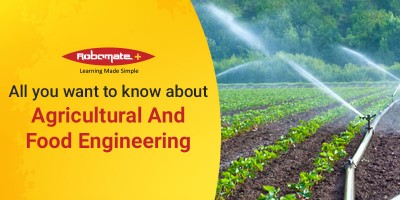
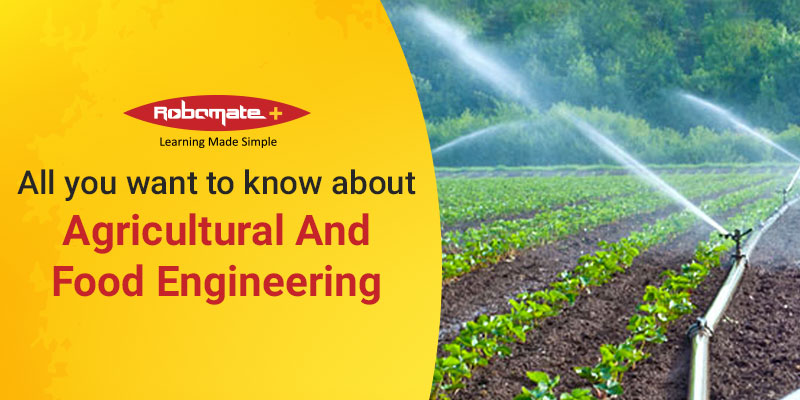
All You Want to know About Agricultural and Food Engineering
What is agricultural and food engineering?
Agricultural and food engineering is a multidisciplinary branch of learning that combines microbiology, science and engineering education. The field includes activities like food processing, product packaging, ingredient manufacturing and control. An agriculture and food engineer employs innovative and advanced technologies to increase crop yield and helps the food industry by developing and ensuring required quality of processed products.
What does an agricultural and food engineer do?
An agricultural and food engineer is involved in agriculture and agro business and is dedicated to make farming environment friendly sustainable and technology driven. They also are engaged with the food industry. Agricultural and food engineers:-
- Analyze latest technology to enhance crop production with minimal use of resources and check excessive use of fertilizers, pesticides etc.
- Develop new technologies and machinery for the automation of agricultural practices. They also work to upgrade existing technologies to improve field preparation, plantation and harvesting.
- Aim to reduce loss of produce during plantation, harvesting and handling.
- Help in maximizing the sustainability and reliability of our food. They research about the safety and standards of food.
- Work towards improving food products, creation of new food products and work in close collaboration with the food industry for the overall development of the food we consume.

What subjects are taught in agricultural and food engineering?
Subjects taught in agricultural and food engineering is basically related to agricultural technologies and its application. The subjects mainly fall under three categories such as:
- Farm machinery
- Irrigation, hydrology, soil water and conservation engineering
- Food processing, agricultural process engineering and post harvest technology.
Courses taught in the branch are (may vary from university to university):-
- Engineering Mathematics:- Applied mathematics in the field of engineering
- Computer Technology:- Course on computer applications
- Engineering Physics:- Applied physics in the field of engineering
- Engineering Chemistry:- Applied chemistry in the field of engineering
- Production technology of field crops:- A course based on agronomy
Download Important Facts & Formulae for JEE
Besides these subjects, a student of agricultural and food engineering is also taught crop production technology, dairy and food engineering and aqua-culture engineering.
UG level agricultural and food engineering
- Duration: – 4 years.
- Entry requirements:-Students who wish to pursue agricultural and food engineering must have passed higher secondary board examination with mathematics, physics and chemistry. The students also need to appear for JEE mains (JEE advanced to study in an IIT) or any other state level engineering entrance examination.
- Colleges offering B Tech in agricultural and food engineering:-
- Indian Institute of Technology Kharagpur
- Colleges offering B Tech in food engineering:-
- National dairy research institute, Karnal
- Central food technology research institute, Mysore
- University of Delhi
- Karunya University, Coimbatore
- SRM institute of science and technology, Chennai
- Anand agricultural university, Gujrat
- University of Mysore
- Anna University, Chennai
- Tamil Nadu Agricultural university, Coimbatore
- Colleges offering B Tech in agricultural engineering:-
- Mahatma Phule Krishi Vidyapeeth, Rahuri
- Indira Gandhi Agricultural University, Raipur
- Rama University, Kanpur
- College of Agricultural Engineering & Technology, Bhubaneswar
PG Level agricultural and food engineering
- Duration: – 2 years.
- Eligibility Criteria: – Minimum score as required in the Graduate Aptitude Test in Engineering (GATE). Students who have studied B Tech in an IIT with a minimum CPI of 7.0 need not take the GATE examination.
After B Tech in agricultural and food engineering, students can opt for 2 years M Tech in 6 disciplines from Indian Institute of Technology Kharagpur. Alternatively, students can choose from various other institutes such as Birsa institute of technology, Dhanbad, College of technology Pantnagar, Assam University, Silchar, Indian agricultural research institute, New Delhi to study M Tech in Agricultural Engineering.
PhD Level agricultural and food engineering
- Duration:- Minimum 3 years for candidates with B Tech or M. Sc degree and minimum 2 years for candidates with M Tech or M.S degree.
- Eligibility criteria: – Candidates with B tech or MSc degree are required to qualify GATE. Alternatively, candidates can take the NET examination.
Doctoral degree or PhD is offered by Indian Institute of Technology Kharagpur. The PhD degree is awarded on the basis of satisfactory performance in course-work, seminars, thesis submitted by the student on his or her research and final viva-voce.
Skills required for an agricultural and food engineer
- Critical thinking: – An agricultural and food engineer needs critical thinking skills. He needs to assess and identify weaknesses and strengths of alternative solutions provided to him
- Complex problem solving: – Identifying complex problems and providing required information to develop productive solutions.
- Active listening: – Giving full attention to what people say, understand the problems and analyze the required area that needs to be worked on.
- Active learning: – Having a mindset to learn new things everyday related to the field and understanding the advantages of new information available for the update of current technologies and providing solutions to possible future problems.
- Systems analysis and evaluation: – Understanding the work of every part and component of machinery, analyzing the advantage and disadvantage, system performance and improving it for a better goal achievement.
- Reading comprehension: – Having a great knowledge of perceiving what is written in an official document and working accordingly to achieve the said goal.
Scope and Job opportunities for agricultural and food engineers
Other Engineering Courses in India
India is primarily an agricultural country. According to official sources, agriculture contributes to 13.7% of the GDP and it is the livelihood of a large number of countrymen in India. India ranks second in worldwide farm output and hold the second place in agricultural land with 179.9 million hectares. It is evident that agriculture influences the country’s economic growth and to meet the requirements of the growing population, there is a need to increase produce with quality yield. The National Food Security act or Right to Food act aspires to provide subsidised food grains to at least two-thirds of India’s population. To realize India’s goal of food security and export potential of farm products, technology driven farming is needed and thus Agricultural and food engineering as a specialized branch of science has become vital today.
Although India has gone through tremendous and noteworthy changes in the past few decades, it still needs to adapt modern farming thus increasing the needs of technology related agricultural solutions. Thus there is a great need of experts who can provide a way out of the pressing problems of food insecurity faced by the country.
Well paid careers are available in private and government sectors for qualified agricultural engineers. They also work in agricultural firms, food processing industry, research organization and laboratories.
- Job profile
- Farm management
- Project coordination
- Product design
- Horticulturalist
- Researcher
- Food supervisor
- Design, packaging and distributing food products
- Top recruiters in agricultural and food engineering
- Food and Agricultural organization
- Agrotech food
- ITC Limited
- Amul
- Parle
- PepsiCo India
- Nestle India Pvt. Ltd.
- Cadbury India Ltd.
- Britannia India Ltd.
- Salary
Depending on the efficiency and capability, a fresher can expect a monthly salary ranging from Rs 20000 to Rs 25000 in government sectors. Private sector, MNC and NGO employees can expect higher salary. A lecturer in the field of agricultural and food engineering can earn up to Rs 1,50,000 per month along with other allowances.
Download Important Facts & Formulae for JEE

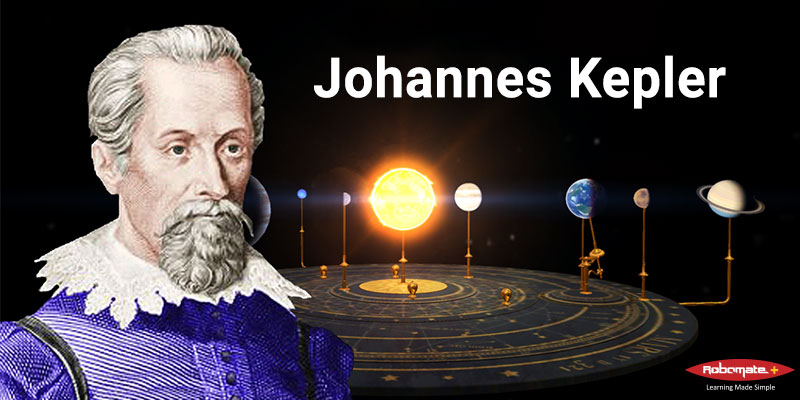
Johannes Kepler – Biography and Discoveries
Johannes Kepler, a German mathematician, astronomer, and astrologer was born on December 27, 1571. He is a prominent personality of 17th century.
Johannes Kepler Early Work

He started as a mathematics teacher at a seminary school in Graz and later went onto become an associate of Prince Hans Ulrich von Eggenberg
He worked as an assistant to the astronomer Tycho Brahe in Prague, and imperial mathematician to Emperor Rudolf II, Matthias and Ferdinand II.
He was also a mathematics teacher in Linz, and an adviser to General Wallenstein
His contribution in the field of optics led to improvement of refracting telescope (the Keplerian telescope). The telescope was mentioned among great discoveries along with the telescope discovered by Galileo Galilei.He was also a member of the Accademia dei Lincei in Rome.
The Scope and Excitement of Physics
Johannes Kepler’s Contribution
Johannes Kepler bought new insights in the field of astronomy and astrology. He added religious and spiritual comments to these elements and developed a theory that God created the world according to a defined plan through the natural light of reason. Kepler defined astronomy as “celestial physics” as “an excursion into Aristotle’s Metaphysics” and as “a supplement to Aristotle’s On the Heavens“. The studies by Kepler has changed the definition of astronomy from physical cosmology to universal mathematical physics
Johannes Kepler’s Prominent Works
- Kepler’s laws of planetary motion (his works based on Astronomia nova, Harmonices Mundi, and Epitome of Copernican Astronomy)
- Kepler conjecture
- Rudolphine Tables
It was believed by previous scientists that all the planets and the sun orbit around the earth. However scientists like Copernicus hypothesized that the earth and other planets orbit the sun. However, this theory was rejected by the Church and other prominent personalities. Keplers’ work was highly appreciated by Danish astronomer, Tycho Brahe, who soon realized his potential and didn’t give him complete information about planetary motions. But when Brahe died, Kepler accessed this information and with this he could analyze the different speeds and distances of the planet observed at different times. With the available details Kepler formulated the Kepler’s Laws of Planetary Motion. “CBSE Syllabus for Class 11 Physics” covers Kepler’s laws of planetary motion. There are three laws
- Kepler’s First Law- Law of Orbits: The planet orbits around a star (sun in solar system) and follows an elliptical path
- Kepler’s Second Law- Law of Equal Areas: The planet and the star if joined by an imaginary line then they sweep equal area in equal interval of time.
- Kepler’s Third Law- Law of Harmonics or Law of Periods: The Square of revolution time is proportional to the cube of the semi major axis of the elliptical orbit formed.
Maharashtra State Board Syllabus for Class 8
Although class 8th exam is not a board exam, but the syllabus of it is very important for laying foundation for higher classes and also for the competitive exams. Maharashtra State Board Syllabus 8th standard is programmed such that it covers all the necessary topics which are required for developing strong base for higher classes. If the students strictly follow the syllabus as per the Maharashtra State Board Syllabus 8th standard, then the student will definitely score well in the examination and also in higher classes. A strong foundation is important for making a strong building likewise, a strong understanding of the subject helps in clear concepts of the topics. Clear concept develops skills which are important to understand and solve the subjects of higher classes.
Maharashtra State Board Syllabus 8th standard is the stepping stone for higher classes. If students are dedicated towards studies, they can start self-learning. Students who put efforts in self-learning and are hardworking, the chances of them scoring good marks and also prospering in competitive exams are higher. Maharashtra State Board Syllabus 8th standard helps students to be competitive in the education field at both national and international level. In case the candidates are shifting from one state to the other, or even other country, the syllabus provides the adequate knowledge to adapt to the new education system.
Mostly students find it difficult to study subjects such as math and physics. Maharashtra State Board Syllabus 8th standard covers all the basic topics of these subjects. In Maths you can find the topics such as Circle, Area, Statistics, Quadrilateral and in science Magnetism, Electric Current, Structure of an Atom, Soil. All-important topics are conveniently covered for basic understanding of the concepts.
Class 8 Maharashtra Board English
We offer the appropriate notes (short and long), study material, mock test papers, sample papers, questions & answers and videos. All the chapters are covered in detail along with the exercise for the students to practice. Apart from 8 Standard English Textbook, NCERT books with solutions are very helpful in learning and getting the right answers for the questions.
Before selecting any tutorial for your student, you can discuss with the tutors and take demo. The tutors should be patient and should give personalized assistance to the candidates which help in improving the candidates. Personalized attention gives students an opportunity to open about the doubts and discuss the topics in which they are weak.
The Syllabus of Class 8 Maharashtra Board English is given Below.
1.1 – A Time To Believe
1.2 – Dick Whittington And His Cats
1.3 – The Pilgrim
1.4 – Revathi’s Musical Plants
2.1 – Vocation
2.2 – Nature Created Man And Woman As Equals
2.3 – The Worm
2.4 – Three Visions For India
2.5 – The Happy Prince
3.1 – The Plate Of Gold
3.2 – The Kite Festival
3.3 – The Last Leaf
3.4 – Leisure
4.1 – The Vet
4.2 – Revolutionary Steps In Surgery
4.3 – The Bees
4.4 – Ramanujan
4.5 – A Battle To Baffle
GR 1 – Tenses
GR 2 – Finite And Non Finite Verbs
GR 3 – Change The Voice
GR 4 – Modal Auxiliaries
GR 5 – Transformation Of Sentences
GR 6 – Direct And Indirect Speech
GR 7 – Degrees Of Comparision
GR 9 – Clause Analysis