

Test Papers – National Board Exam (IX-X)

How CBSE Board papers are checked?
Introduction
CBSE is known for its amazing educational system. With a high-standard plus high-quality paper checking system, some elements and hacks still lurk in the system. So, if you are looking out for CBSE board checking patterns, you have stumbled upon the right place!
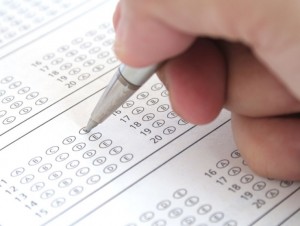
Timeframe (for each paper and each answer)
The paper is usually of 100 marks and has been divided into various sections. Solving the MCQs portions should take about 15-20 minutes. You should attempt each short question in 2-3 minutes (provided you have good speed) and then reserve the remainder of the time for the long questions portion.
Marking Scheme
The examiners are given a marking scheme which they are supposed to follow. Conversely, students think that appropriate portrayal of the answer sheet (everything is written entirely wrong but beautified) will assist you with scoring admirably! It is another misguided judgment among CBSE students about the CBSE board checking pattern.
More Words doesn’t mean more Marks
For the most part, students believe that if a term is asked in the board exam at that point, we should write a lot about that term. Along these lines, students begin composing everything that they think about the term. They surmise that written work with the highest number of words will get them more marks, which isn’t valid. Students will get marks if they have included essential focuses in their answer.
Repeating Questions will never get you more marks
An examiner is not blind. If he spots out what are trying to do, he may end up giving you even lower than you deserve. Don’t repeat the answers to the same questions over and over; it would only create a wrong impression if caught. Honestly attempt all the answers to questions, without repetitions.
Conclusion
Don’t fret so much about the outcome. If you are not happy with your CBSE results, then students can apply for marks confirmation process after outcome affirmation. Moreover, if the rechecking doesn’t make any difference either, then consider it back luck and move on. Plus, don’t just relay on CBSE board checking patterns, rely on your hard work!

How to Improve Handwriting
Introduction
Having good handwriting is valuable for composing letters and cards and rounding out critical printed material. Do you think that your penmanship is somewhat less demanding to examine? Don’t stress! There are a couple of strategies you can use to make your writing more intelligible and stylishly pleasing. Try out a few unique writing styles.
Nice Pen
An idealist may reveal to you that foundation pens are unrivaled — probably because it’s so difficult to get enough swans to make quills— however, there are a lot of good ballpoints, roller-balls, and even gel pens out there. Use pens with various measured nibs or balls to discover a line thickness that satisfies you, and try different things with multiple hues. Take mind — it doesn’t make a difference how excellent your content, is, you should test until the point when you discover a sort of pen (or even pencil) that works for you.
Learn to Hold Your Pen Correctly and experiment with Cursive, Slanting writing
Making loosening up jots on a page will enable your composition to style, via preparing your hand and eye to cooperate, and furthermore encouraging your pen to skim over the page quickly and effectively. Letters must be the right tallness in connection to each other – if the stature of your notes isn’t proper, your written work will be hard to peruse.
Write on Lined Paper
Compose on lined paper, yet ensure the lines aren’t excessively restricted: written work considerably bigger than typical ensures letters are framed legitimately. You can shrivel it down again when things have progressed. This would help you achieve good handwriting. Try to give in more space to make your writing more legible.
Practice while making your notes and pay attention to the size
Take a sheet of lined paper and compose the letter set, planning to join each letter. Spotlight on which letters you have the most issue with. Do your Os look like Qs or the other way around? Are a few letters not legitimately shaped? Maybe your a and g are left open at most, so they can be mistaken for u or y. Circle the letters you’re not content with and take a shot at enhancing those. Also, give the appropriate size. Don’t write too big or too small.
Look to other handwriting styles for inspiration
If you especially respect an alternate technique for someone else, make some follow-up paper and begin to duplicate it – the more you copy a specific method for composing, the simpler it will be to bring components of that into your content.
Conclusion
Good writing takes time and practice. It isn’t something that happens overnight. Sit with your back straight, feel level on the floor, legs uncrossed. Loosen up your hand and arm. Shake your hand until the point that it feels floppy. Relax. Focus on practicing. It won’t be long before you learn your perfect handwriting style.

Algebra Formulas Class 10
Introduction:
Algebra is a branch of mathematics dealing with symbols and the rules for number theory, geometry and analysis. The basic form of Algebra is elementary algebra. The symbols are written as Latin and Greek letters which represents values referred to as variables. “Algebra Formulas class 10” are algebra equations. In simple terms, the algebra equations describe the relationship between the variables.
Click here to Download – Algebra formulas class 10 pdf
Algebra is one of the important chapters of Class 10 CBSE and the important topics which are to be studied and practiced are
- Algebraic method of solving pair of linear equation- elimination method
- Algebraic method of solving pair of linear equation– substitution method
- Algebraic method of solving pair of linear equation- cross multiplication method
The chapter has a number of formulas, students may find it difficult to read. Inorder to make it easy, make a list of the formulas and store it as algebra formulas class 10 pdf, here is the list of important formulas
You can also note down all the formulas in a single page and keep it on your study table or on the board or wall.
Download Algebra formulas class 10
1. (a + b)2 = a2 + 2ab + b2
 2. (a - b)2 = a2 - 2ab + b2
 3. (a + b) (a - b) = a2 - b2
 4. (x + a)(x + b) = x2 + (a + b)x + ab
 5. (x + a)(x - b) = x2 + (a - b)x - ab
 6. (x - a)(x + b) = x2 + (b - a)x - ab
 7. (x - a)(x - b) = x2 - (a + b)x + ab
 8. (a + b)3 = a3 + b3 + 3ab(a + b)
 9. (a - b)3 = a3 - b3 - 3ab(a - b)
 10. (x + y + z)2 = x2 + y2 + z2 + 2xy + 2yz + 2xz
 11. (x + y - z)2 = x2 + y2 + z2 + 2xy - 2yz - 2xz
 12. (x - y + z)2 = x2 + y2 + z2 - 2xy - 2yz + 2xz
 13. (x - y - z)2 = x2 + y2 + z2 - 2xy + 2yz - 2xz
 14. x3 + y3 + z3 - 3xyz = (x + y + z)(x2 + y2 + z2 - xy - yz -xz)
 15. x2 + y2 = 1212 [(x + y)2 + (x - y)2]
 16. (x + a) (x + b) (x + c) = x3 + (a + b +c)x2 + (ab + bc + ca)x + abc
 17. x3 + y3 = (x + y) (x2 - xy + y2)
 18. x3 - y3 = (x - y) (x2 + xy + y2)
 19. x2 + y2 + z2 -xy - yz - zx = 1212 [(x-y)2 + (y-z)2 + (z-x)2]
How to Avoid Common Mistakes in a Board Exam
Most common mistakes in board exam happen due to panic and stress. The students should go to exam center with confidence. Here are the common mistakes in board exam
Late Arrival for a paper: Students should be 15 mins before time to the exam hall. Arriving late for the exam hall creates panic and students stress-out and the mind blanks out.
Not Reading the question paper: Board allots 15 mins to read the question paper. Students should gracefully read the question paper and marks the questions which he or she can write better. Students should organize the thoughts and manage their time during the exam.
Skip Questions: Do not attempt the questions which consumes time and which you are not sure-off.
Leaving Question Unanswered: Try to attempt most of the questions. Attempting a question can fetch your atleast few marks. But make sure that you don’t write unnecessary statements which can irk exmianer.
Download MH State Board SSC Class 10 2019 Prelim Papers with Solutions
Diagrams: The diagrams are self-explanatory which helps in evaluating students understanding of the subject. It is always a good idea to draw diagrams wherever applicable but at the sametime the answer should reach the word limit.
Mismanagement of Time: The time required to be dedicated on each question is a tough task to decide. First answer all the questions which are easy and quick to answer and then move forward to attempt the questions which are difficult to answer. Always try to answer the questions which take less time and you have good hold over it. Do not elaborate the answer more than required. Write important points and try to add headings and subheading which eases evaluation of your paper and increases the chances of getting good marks. You can allocate the time for each section and make sure you meet the deadlines inorder to attempt all the questions and get a good score. When you start answering the question, make a framework of the points to be included in the answer. The flow of contents should be appropriate and a preplanned answering is important.
Copying incorrect data: Most students out of panic or hurry fail to read the question paper correctly. The answer might be correct but to the question which is not in the question paper. And in few cases there will be error in tallying the answer. By the time you realise the mistake it will be too late. Ultimately you will loose time and marks. So concentrate well before reading the question paper.
Handwriting: This is very important; your paper should be neat without any scratches and a clear hand writing which the examiner should be able to read without any hindrance. The writing might not be good because you will be in a last minute hurry to complete the paper or you simply ignore. Make sure you make the paper readable, examiner will not put any extra effort to understand the text you have written.
Rechecking of Question Paper: Many students fail to recheck the paper due to lack of time or ignorance. Sometimes it may happen that you write incorrect roll number of other information which is very important. If time permits check the answers for correctness or accuracy.
Leaving Exam Hall Early: Utilize the complete exam time to write and self-eve late the paper.
Trigonometry Formulas for Class 10
Download Trigonometry Formulas PDF
Introduction:
The word Trigonometry is derived from the Greek word trigōnon means “triangle” and metron means “measure. It is a branch of mathematics which deals with the relationship between lengths, height and angles of triangle. The subject was introduced in 3rd century BC while applying geometry formulas to the astronomical studies. Trigonometry finds applications in number of fields such as
- Engineering
- Astronomy
- Physics and
- Architectural design
Trigonometry formulas are for class 10 has important topics of Linear Algebra, Calculus and Statistics. Inorder to master over the topics, the students are required to understand and learn all the formulas and correctly apply the formulas to solve the subjects.
Click here to Download Trigonometry Formulas
Trigonometric Ratios:
It provides the relationship between the angles and length of the side (adjacent, opposite and hypotenuse) of the right angle triangle.
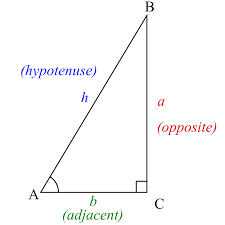
The Sides:
The different sides of the triangle are referred to as opposite, adjacent, and hypotenuse as shown in the figure
Adjacent side is always next to the angle
Opposite as the name says it is opposite to the angle
Inorder to learn trigonometric ratios, students should understand the following terms of a rectangle
Sinθ= length of opposite side/ length of hypotenuse
Cosθ= length of adjacent side/ length of hypotenuse
Tanθ= length of opposite side/ length of adjacent side
cscθ = length of hypotenuse/ length of opposite side
secθ= length of hypotenuse side/ length of adjacent side
cotθ = length of adjacent side/ length of opposite side
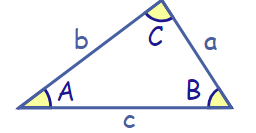
Trigonometric Identities:
Trigonometric Identities refer to all types of angles not just right angle triangle.
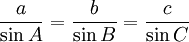
Law of Sines
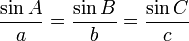
It can also be re-arranged to:
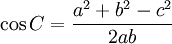
Law of Cosines

It can also be re-arranged to:
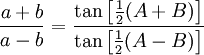
Law of Tangents
Trigonometric Ratios of Complementary Angles:
Any two angles whose sum is equal to 90°
Thus, two angles X and Y are complementary if,
∠X + ∠Y = 90°
∠X is known as the complement of ∠Y and vice-versa.
Ina right angled triangle, the remaining two angles are always complementary.
Make list of Trigonometry formulas or you can also make Trigonometry formulas pdf and store in the mobile or in the desktop to learn.

Best Time to Study: Day or Night?
When is the best time to Study?
When is the best time to study for your brain? It’s one of those extensive discussions among all students; is it better to learn during the night when it is quiet or in the day when there is a lot of activity? Each side has its particular faithful supporters who will boast of the advantages of their favored strategy to attempt and persuade you regarding the best time to study.

Is Day the Best Time to study?
After a decent evenings rest, you’ll likely have more vitality and a higher capacity to focus on studies the following day. A majority of people are reachable during the day, so it’s less demanding to speak with your companions or instructors in the day if you have any inquiries. Normal light is better for your eyes. Fluorescent light in not good for the eyes and can influence our body’s regular routine for rest. We are usually programmed to work during the day and rest during the evening, so we take the day as the best time to study then there are verifiable advantages, for example, having the capacity to go to the library or bookshop.
Is Night the Best Time to Study?
People are more dynamic, louder and serious during the daytime. During the evening it’s calm and quiet. It’s just you and the night owls. So you can study in peacefully. During the evening there are fewer diversions than amid the day. Parents and siblings are sleeping at this time and there will be minimum distractions due to them. In case you’re fortunate to live close to a library that stays open late you can visit such a place where most probably there will be minimum number of users. These arguments demonstrate that for some people night is the best time to study. The night calm and peace of night can help you be more creative and get more ideas than during the day.
Conclusion
Everyone supposes they know what the best time to study is, while in reality, every individual is unique and can choose according to his or her comfort. There are a few people who get more out of learning around night time while others find day as the best time to study.