
Test Papers – ICSE – Class – X

Detailed Commerce Subjects List in Class 11
Commerce can be defined as the exchange of goods and services. It includes business activities from production to the final consumer. Commerce has been trending as one of the most opted subjects by students after class X as it offers lucrative jobs after graduation. In order to select commerce as a subject in class XI, the student should know the subjects taught in commerce and should analyze one’s interest and strength in studying the subject. Given below is the Commerce Subjects List in Class 11 in detail.
Commerce Subjects List in Class 11
Apart from the selection of good Commerce Subjects, it is equally important to be dedicated to the study of commerce. The student who is interested in numbers, business and economics can opt for commerce. The main Commerce Subjects taught are accountancy, business studies, economics and Maths. In addition to the core Commerce Subjects, the students will have English or other languages depending upon the selection of the medium and a second language also.
Watch FREE HSC Class 11 Video Lectures
Accountancy Subject in Commerce
As the name says, the subject helps to analyze and understand the profit and loss of a business enterprise. The financial statement produced gives financial information about the business entity in terms of shareholders, managers, and success or failure. Accountancy can be classified into 3 divisions accounting, bookkeeping, and auditing. It helps in summarizing the expenditure in terms of transactions and events and then interpreting the results of the expenditure. Accountancy is the backbone of any transaction which happens in any business organization.
Commerce Business studies
The subject lays basics for studying MBA (Masters in Business Administration). The subject provides insights about business organization – its structure, function, operation management, human resource, and marketing. It helps in understanding how business activities impact society through employment, income, opportunities and standards of living. This one important part of the three core Commerce Subjects provides insights into professional life and corporate culture.
Economics Commerce Class 11
In simple language, economics is the study of the production, distribution and consumption of goods. The subject teaches us the relation between supply and demand, consumer behavior and cost concepts. This important component of the Commerce Subjectsalso deals with the topic of development, inequality, poverty, and governance. It is an interesting subject that gives insight into the economy, employment policies, the impact of international trade, etc. Economics is broadly classified into two types – microeconomics and macroeconomics. Economics is not just about money matters, economic reasoning in politics, law, psychology, history, marriage and family life, have been increasingly used.

Commerce with Maths subjects class 11
It includes algebra, trigonometry and geometry. While at the outset it seems these subjects are not required in commerce, but in reality, these topics will help you in preparing for competitive exams to pursue higher education.
Many students think Commerce Subjects are easy, when compared to other subjects such as Maths and Science. They are equally complex and provide you with competitive jobs, provided you hold professional qualification. Students with interest and aptitude should opt for Commerce Subjects. You passion to achieve career goals will help you climb the ladder of success easily.
Learning and Understanding Better with ADEPT
Learning is the most important aspect of education. Every student has his own caliber of reading and understanding. A number of techniques have been developed to help improve students’ learning experience. ADEPT is one such technique which is widely used by the students for a better understanding of difficult concepts. ADEPT is an acronym for Analogy, Diagram, Example, Plain English and finally Technical definition. By following simple A, D, E, P and T of ADEPT, even the most complex concepts can be understood within a short time.
A for Analogy – What is the topic like?
For every topic you study, there is a high chance that you have studied about something similar in the past. Analogy refers to that basic or small information which you already have. Try to compare the information you are learning at the moment to the information you understand thoroughly that you have learnt in the past.
D for Diagram – Visualization.
If you are unable to understand complex problems of Maths or processes in biology, then draw a diagram indicating the various steps as given in the text. You can also check Google images where you can find images for step-by-step procedures. Diagrams help in visualization and absorb the concepts. This will be a brainy job, as you need full concentration to understand the process.
E for Example – Experience the Concept.
Most of the chapters will come with the examples. Careful understanding of the example can help you understand the concept. In a few cases, group studies can also be helpful. You can take your time and understand the concept with logic.
P for Plain English – Use Simple Language.
Put down your understanding in plain and simple language. You need not to include all the technical terms, but try to explain the concept to a small child. This is a technique used by Richard Feynman. He used to explain his concepts to his class of students to make sure if he had understood it himself. If you are unable to explain the concept in plain language then it is most likely that the concept is not clear for you.
T for Technical Description – the formal presentation of the topic.
After the basic understanding of the concept, the next step is to use technical terminologies to give the formal look and score better. So try to formulate a description for the concept with the least possible number of words.
8 Tips on How to Focus on Studies and Get Ready for Exams
Adept for Understanding
ADEPT is a user-friendly technique of studying better, the students can make a checklist and proceed in a phase-wise manner. Mugging-up technical description and practicing the problems is no longer a practice. The concept plays an important role, once you are thorough with the concept then you can solve any kind of problems, you need not to rely on your workbook solutions to score better. Students who are clear with the concept will score well in both academics and also in competitive exams.
Before proceeding for technical description, make sure you can explain the process in your own words and have the capacity to solve the example problems and can explain it to fellow members. The diagram you have created for imagining the process is as per the concept and is giving the acute results.
When you are at analogy stage everything seems to be blurred without any clear understanding. Many students face this situation after hearing lectures. They have a vague idea about what they have learned and the process or the diagram which your teacher has shown. As you proceed from analogy phase to diagram example and simple language you will develop a strong foundation and confidence to solve any kind of similar program. A learning process requires not only information and details but all the connecting dots should be there to get a fruitful outcome. Feynman Technique can be used for putting the concept in simple language.
Feynman Technique has been developed by Richard Feynman who has won Nobel Prize in Physics n the year 1965. His technique is simple. On a plain paper write down the topic name to be studied and then start explaining the topic in simple language as if teaching to a new student. This exercise helps in knowing your level of understanding of the topic and most importantly what you do not know about the topic. At this point, you will be clear with your weak points on the topic. Refer the study material, read and again repeat the process. If you feel you are just paraphrasing the topic try to concentrate more and split the topic in as simple language as possible, study the example to be clear with the concept.
Make learning a joyful experience; it is natural to have doubts while learning. You can develop your own technique of learning and can have own explanations. The ADEPT technique can be applied to studying all types of subject. Whenever you start with any topic, make a list of ADEPT for each topic and mark once a stage is completed. This technique allows studying quickly with a clear concept.
Let’s look at an example of the ADEPT technique with the topic “Neurotransmission”
Analogy: This refers to neurons, the part of the nervous system which transfers information
Diagram: Neurons, connected to each other and transferring information
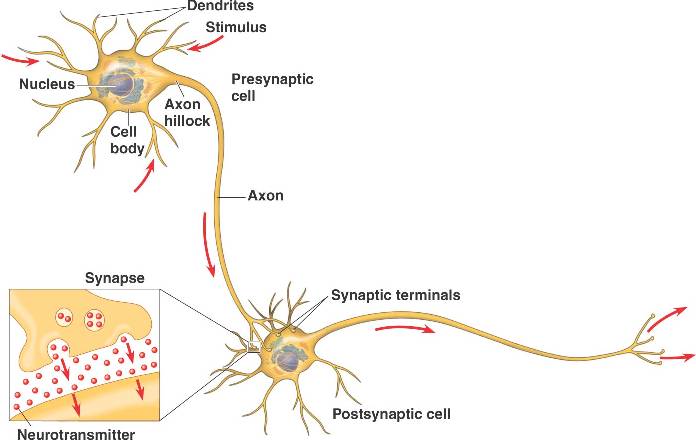
Example: The electricity is transferred from one connection to another by connecting wires.
Plain language: neurons are connected to each other and release substances which transfer information
Technical Information: Neurotransmitters, the chemical messengers released by the terminal end of neurons binds to the dendrites of the adjacent neurons and transfer the information.

Montessori, Waldorf and the Reggio philosophies in teaching and learning
A child’s brain is designed to learn and develop. Children should be given sufficient space to explore the space, environment, and opportunity. Early childhood education centers such as daycare, play school or preschool are aimed at identifying the potential skills of the children in a play-way method. They will be given an opportunity to analyze their environment and solve the queries raised by the little brains. Many child-centric schools follow student friendly approaches for learning such as Montessori, Waldorf and the Reggio philosophy. Parents should understand the concept behind each of these learning techniques to best judge the school which they intend for their children. The early steps of education foundation on tender minds will have an impact throughout their educational career. Colleges look for a student who have critical thinking ability and unique individuality and contribute to the college community.
Montessori Philosophy:
In a Montessori, children are allowed to work at own pace. A typical class is composed of a teacher, child, and the environment. The teacher creates the class environment and gives freedom to the students in limits, the student utilizes the created environment to develop himself and interact with the teacher for support and guidance. Dr. Montessori has designed learning materials for developing a child’s five senses for both younger and older students. It is a child-centered approach. Most of the Montessori schools will have fewer children and will be managed in a small area. A Montessori program may not be suitable for students who are over stimulated or aggressive.
The classroom learning materials are kept low shelves which allow easy access for the children, the children use the material as long as required and after finishing work, they are trained to place the material at the same place. Montessori toys called manipulative toys which alarms children if they are assembling or arranging it wrongly. Teachers will be the observers and will help the kids in solving.
A Montessori teacher is trained, credentialed Montessori with principles, concepts, and methods of Montessori. If a school claims to be a Montessori, it is not necessarily credentialed as there is no restriction for use of the word” Montessori”
Highlights of Montessori:
- They are progressive schools which have multiple-age children
- The teachers will be observing and helping children in the process of learning
- Children are free to move around and can engage with an article as long as they are interested
- Different age group children will be in the same area, which motivates younger children to learn and develops confidence in older children
How to support your Child Before and During the Exams
Reggio Philosophy:
Reggio, this methodology of teaching originated in Italy after World War II to rebuild society. The aim of this teaching method was to make better citizens. Although the Reggio method of teaching is not widely spread it does mark its presence in many educational institutions.
It is a project-based approach where a group of students is assigned a task. The projects will be based on the students’ approach which the teacher frames it as per the educational concept. The progress of the student is assessed by taking the photos, video and pointing out the observations. There is no formal training for the teachers.
Children learn to collaborate, solve problems and to resolve conflicts. The concept is introduced in early childhood education (toddlers and preschool children).
The toddlers are encouraged to explore their environment and when they come up with their questions and doubts rather than solving their questions, teachers assign it as a project. Students will be made to understand the concept. Examples: If a student comes up with a question of how we get fruits. Then probably teachers will ask them to make a project with different types of fruits, trees and make a garden explaining the growth of trees and the formation of fruits. The self-learning approach builds a strong understanding of the concept and zest to explore further.
Highlights of Reggio teaching:
- Children have control over what they are learning
- They learn by using their ability of observation, touch, and listening
- Children will be given an opportunity to explore their environment and fellow children and understand their relationships.
- Children must be allowed to express themselves
Waldorf Philosophy:
It is an essential requirement for the teachers of Waldorf School to be Waldorf certified and also schools need to have Waldorf certifications. There will be designated days for different activities such as painting, baking, gardening, etc. It is good for students, teachers, and parents to know what the student is expected to learn or do in the school today. There is definite predictability element. The schools will have a homely environment with a number of natural elements and toys included. There is no grading system, hence there is no judgment passed about the child. There is a “No” to electronic items such as computers, videos or electronics and there will not be any homework, test. The classroom sessions are mostly in the open outdoor environment. The reading and writing are introduced from first grade.
This education system encourages students ‘how’ to think in a given environment and not forcing them ‘what’ to think. It helps in the overall development of the student. It helps the student to adjust in any given environment rather than the ability to fit in a definite condition. Waldorf system helps in the intellectual, emotional, physical and spiritual development of the students. Waldorf learning starts at preschool and ends with twelfth grades.
Highlights of Waldorf teaching:
- Subjects are to be experienced and not taught and arts are included in the subjects being taught
- Waldorf teacher and her class collaboration will be there for seven years (it’s a rule)
- Academics and arts are integrated to enable development of the student in all sphere
- Eurhythmy is a unique approach of Waldorf curricula and is an integral part of it
- It’s a Child-centered and teacher-guided approach
Lastly, before finalizing any school make sure that the school is well-managed and fiscally sound.
10 Jobs in Science You May See In The Future
Career selection is an important aspect of life. It is not something that can be achieved overnight and changed as per the moods or requirement. Your qualification will define your area of work and the expected pay scale. It is important for students to understand that field selection is critical for career growth. As per a 2015 report from the Center on Education and the Workforce at Georgetown University Pharmacy, pharmaceutical sciences, and pharmaceutical administration professionals were the highest paid in the United States and other notable professions included Biochemist or Biophysicist and Geology and earth science. The salaries of the professionals will depend upon the qualification, position, and the experience. The higher the qualification and experience, the better the pay! Let’s find out some Jobs in Science we may see in the future.

1. Pharmacy, pharmaceutical sciences, and pharmaceutical administration: Pharmacists play an important role in health and well-being of the society whether it is the manufacturing of the pharmaceutical products, research, and development or dispensing, pharmacists are an integral part of the healthcare system.
Qualification: Bachelors degree in pharmacy or higher
2. Biochemist or Biophysicist: Biochemists and biophysicists work on chemical and physical properties of the living matter such as growth and development, diseases, development of biological products to improve human health, etc. This is one of the Jobs in Science you will see expanding in the near future.
Qualification: Bachelor’s and master’s degree in biochemistry, biology, chemistry or physics, a post-doctorate degree will be helpful in holding a good position in research and development organization.
3. Conservationist: There has been immense deforestation and industrialization; the agricultural lands are being converted into residential landscapes. Conservationist with the help of landowners and Government bodies work towards environmental protection of natural resources such as soil, water, forests, etc.
Qualification: bachelor’s degree in ecology, biology, natural resource management, agriculture, or environmental science
All You Want to know About Agricultural and Food Engineering
4. Environmental Scientist: This profession will be one of the highest paid professions in the near future. The profile of these scientists will aim at identifying the source of pollutants from the atmosphere and eradicate pollutants. One of the Jobs in Science you will see truly increasing in the future, it will be that of an Environment Scientist.
Qualification: bachelor’s degree in environmental science, biology, engineering, chemistry or physics. If you want to climb the ladder higher, a master or a doctorate degree will be quite helpful.
5. Environment technicians or Environmental Science and Protection Technician: These professionals work with environmental scientist to monitor the environment. They study the source of pollution and the measure to be taken for prevention and control of pollution. Owing to the increasing environmental changes and pollution, the requirement of environment technicians is expected to increase many folds in the near future.
Qualification: Bachelor’s degree in chemistry or biology, an associate degree or a certificate in applied science or science-related technology
6. Forensic Scientist (forensic science technicians or crime scene investigators): These scientists specialize in collecting and analyzing physical evidence which can be collected from the crime spot. Doing an internship for gaining exposure and experience can help you in securing a better job.
Qualification: bachelor’s degrees in chemistry, biology, forensic science, or an associate degree in applied science.
7. Hydrologist and Geoscientist: As the name says, the specialist is responsible for the study of water (both underground and surface water). Due to high environmental changes, there have been changes in the distribution and physical properties of water. It is expected to have a steep hike in the salary and the requirement of hydrologist and geoscientist in the near future. A good position in any research organization requires a doctorate degree. These scientist works are aimed at maintaining the earth’s environment. This is one of the Jobs in Science you do not see currently as being popular, but you will see more of it in the future.
Qualification: Masters degree in Environmental science, earth science or geological sciences
8. Medical Scientist: They are responsible for the design and conduct studies to identify the cause, prevent and treat the disease. They are responsible for making innovative medicines which have improved the biological profile and therapeutic index. They work in hospitals, laboratories, and universities. A medical scientist can further do specialization as pharmacologists, toxicologists, neuroscientists, serologists, cancer researchers, immunochemists, etc.
Qualification: The students who intend to pursue character as a medical scientist should possess a postgraduate degree in medicine or a doctorate in biological science.
9. Nuclear medicine technologist: Computed tomography (CT) scans and positron emission tomography (PET) scans have been used as important diagnostic tests for identification of diseases of lungs, brains, livers, kidneys, and other organs. Nuclear medicine technologist plays an important in identifying the area affected and the progression stage of the disease which helps inappropriate treatment. These specialists work with a nuclear medicine physician. They deal with radioactive chemical compounds. They can find a job in nuclear power plants and research and development laboratories. They are also responsible for providing safety instructions.
Qualification: Bachelors degree in radiologic technology, and a certificate in nuclear medicine technology
10. Material Scientist: The profile of a material scientist will be similar to chemist whose job responsibility is to study the structure and properties of the material. They study and analyze all types of materials such as metal alloys, glass or semiconductors.
Qualification: Bachelor’s Degree in Materials Science, Chemistry, Physics or Engineering
Apart from the above, there will be evergreen vacancies of chemists, Food science specialist, Atmospheric science and meteorology, and Nuclear, industrial radiology, and biological technologies, dentists and doctors.

Different Types of Parenting Styles
Parents play a crucial role in a child’s education. Their influence plays a vital part in the growth and overall development of the children. Strict and conservative parenting makes it difficult to deal with children’s nature, the child will be afraid to share their emotions and requirements. This affects their overall growth and performance. Liberal parenting provides equality to children but it affects their behavior and it would be difficult to deal with such youngsters. The parenting can be classified depending upon the parents’ approach towards discipline. There are different types of parenting and children will develop their behavior accordingl
Attachment Parenting
Children who feel secure and safe are positively inclined on both emotional and academic development. Some parents develop a strong bond with the child and spend time with him to be able to read and understand the child. They want to be with him/her when he/she needs them the most. However, the traditional mentality of attachment parenting i.e. attending the child’s need as quickly as possible results in a spoiled child. A child, whose needs are met quickly will never have a sense of independence to be competent in this world.
5 Best Parenting Books For Parents of Teenagers
Helicopter parenting
As the name says parents will be hovering over children. They watch and analyze each and every aspect of child activity with fear. It can harm the child. It is normal for all the parents to have some sort of fears for the child, but in helicopter parenting, the parents tend to be overprotective. Such parents will be constantly aggressive towards everybody who comes in contact with the child. Helicopter parents do not have confidence that their child can take self-care and they keep control with themselves to avoid any harm. They tend to cover children’s mistakes and perform all the children activities such as homework, phoning up their friends, etc. Children will be quite dependent on their parents and do not take risks or have the courage to face consequences.
Authoritarian Parenting
In this kind of parenting there is strict discipline, rigidity and hard and fast rules. The rules set will not be apt and the punishment makes the children stubborn. The attitude makes the children harsh and insensitive. The children will not be able to express themselves and develop aggression and short tempers. Authoritarian parenting is highly dictatorial and follows strict hierarchy and rules without any possibility of deviation. They are highly conservative. There is no possibility of child-parent discussion. This type of parenting has a negative effect on children’s healthy social and emotional development.
Authoritative Parenting
As the name indicates this style of parenting requires high behavior control. This type of parenting has been followed traditionally and the children who have grown up under this style have shown positive behavioral and emotional development. Their academic performance is good. The child will be disciplined to be obedient and follow set rules. Children will have the liberty to think, but the final decision rests with the parents. The parenting style has logic and responds to children needs.
Permissive Parenting
In the Permissive style of parenting, both parent and children are given an equal platform to discuss. It is better than authoritarian parenting. But unlike authoritative parenting, children become spoiled and bossy. Children cannot mark their behavior boundaries as they are raised to be independent. There are studies which indicate that parents who indulge in permissive parenting will find it difficult to deal with children as teens and young adults. There is low behavior control and parents use manipulative methods to control children and avoid punishment techniques.
Un-involved Parenting
The children under this style of parenting have low behavioral control and involvement. The parents fulfill all the demands of the children and make them happy with materialistic articles as required by the children, but will not be able to fulfill the emotional needs of their children. Parents are not interested in children’s daily activities and there is no psychological connection between them.
Instinctive parenting
This seems to be one of the effective ways of parenting where parents do the upbringing from their own childhood experiences and the impact of their parents’ behavior and approach towards them.
Conclusion
It is common for the children to throw tantrums as per the age. However, parents should not give any negative feedback and should have a positive approach towards their child’s behavior. There should be a sharing of responsibility between both parents and one parent should not take up more responsibility and stress. Problems should be addressed with discussions between both parents and even involving the child at times for appropriate solutions. Do not expect your children to behave maturely. Try to be a friend and guide to discipline them to be better citizens.
Watch Video Lectures of your Course for Free